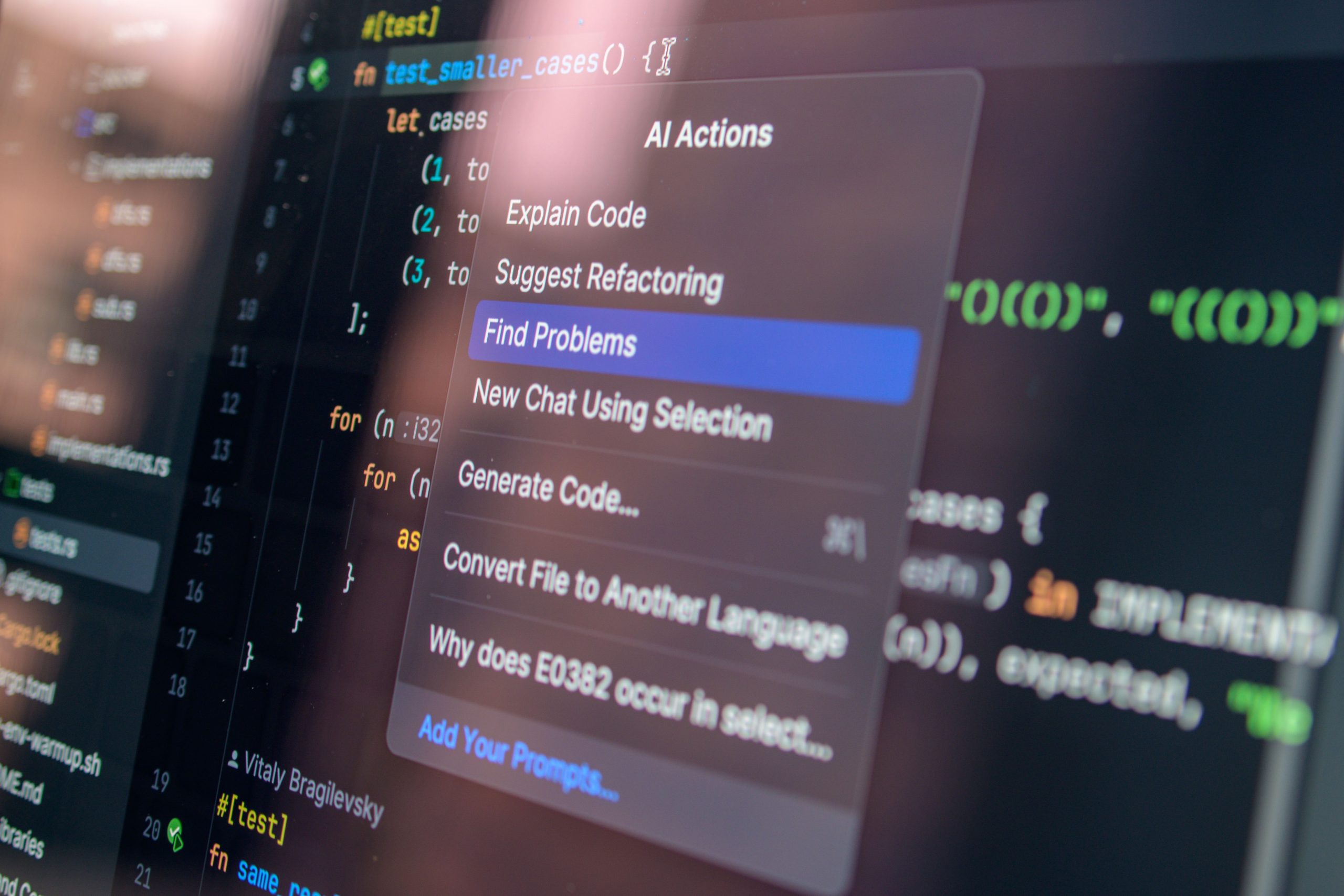
For years, a developer’s value was closely associated with the ability to write good code: clean logic, reusable components, efficient implementation, and a strong grasp of frameworks, languages, and architecture.
Those skills still matter. But as AI coding assistants and agentic AI workflows become more embedded in software development, the developer’s role is expanding. Developers are no longer only writing code. They are increasingly directing, reviewing, validating, integrating, and governing work produced with AI support.
This does not make developers less important. It changes what good engineering looks like.
The next generation of strong developers may not be defined only by how much code they can write. They may be defined by how well they can orchestrate systems, guide AI agents, understand business context, collaborate across functions, and ensure that software solves the right problem for the right users.
Agentic AI is moving software development beyond simple code suggestions. AI tools can now help generate code, write tests, summarize requirements, produce documentation, explore debugging paths, and coordinate multi-step development tasks. Anthropic’s 2026 Agentic Coding Trends Report describes the engineer’s role as shifting from implementation toward system architecture, agent coordination, quality evaluation, and strategic problem decomposition.
That is a meaningful change.
In a traditional workflow, developers often moved from requirement to design, code, test, and review. With agentic AI, parts of that flow may be accelerated or partially delegated. But the human role does not disappear. It moves higher up the chain.
The developer now has to ask whether the problem is clearly framed, whether the AI has the right context, whether the generated code fits the existing system, and whether the output can be explained, maintained, and trusted. This is where the developer becomes less of a pure code producer and more of a system orchestrator.
There is a temptation to think that AI-assisted coding simply makes development faster. Sometimes it does. But speed is only one part of engineering performance.
The harder question is whether faster code generation leads to better software.
Sonar’s 2026 State of Code report points to a “verification bottleneck” created by the rise of AI-generated code. In simple terms, teams may be able to produce code faster, but they still need people who can review, validate, and maintain it responsibly.
That bottleneck matters. If AI generates more code, teams need stronger engineering habits around code review, testing depth, security checks, architecture fit, maintainability, debugging, documentation, and technical debt management.
The work shifts from “Can we produce code faster?” to “Can we trust what has been produced?”
That requires judgment. A developer who blindly accepts AI output may create more downstream risk. A developer who can guide AI, challenge its output, and validate its fit becomes more valuable.
Agentic AI does not remove engineering discipline. It exposes where discipline is weak.
The old stereotype of the brilliant lone wolf coder is becoming less useful.
Modern software work already depends on product context, design understanding, platform constraints, security expectations, data flows, business priorities, and user impact. AI makes that even more true.
When AI handles more routine implementation, the human developer’s value moves toward context. Can they understand what the business is trying to achieve? Can they speak clearly with product, design, QA, data, security, and operations? Can they translate ambiguous requirements into well-framed technical tasks? Can they judge whether AI-generated output actually supports the user need?
Reuters recently reported that AI is shifting hiring at India’s technology hubs toward domain and product expertise over pure coding skills, with routine programming tasks becoming more automated. This is a useful signal for how engineering expectations are changing globally.
The developer of the future will not succeed by staying isolated inside the codebase. They will need to connect the codebase to the business problem. That makes cross-functional communication a core engineering trait, not a soft add-on.
In AI-assisted development, domain context becomes more valuable because AI tools can only work with the context they are given.
A developer working on a healthcare claims platform, banking workflow, logistics system, retail engine, or insurance application needs more than technical syntax. They need to understand the realities of the domain: what failure means in the workflow, which decisions need auditability, where regulatory constraints exist, what edge cases matter most, and which users are affected if the logic is wrong.
AI can generate a function. It may not understand the operational consequence of that function unless the human provides and evaluates the right context.
This is why domain fluency is becoming part of technical excellence. The best developers will combine engineering depth with business understanding. They will be able to ask sharper questions, frame better prompts, detect flawed assumptions, and connect technical output to business value.
As agentic workflows grow, human judgment becomes the control layer.
McKinsey’s State of AI research has highlighted that AI high performers are more likely to define how and when model outputs require human validation. That point matters for software teams as well. AI value depends not just on output generation, but on knowing where human review is necessary.
In software engineering, this may mean developers need to act as reviewers, validators, and risk managers. They must decide when AI-generated code can be accepted, when it needs to be rewritten, when security needs to review it, when test coverage is insufficient, and when a workflow should stay human-led.
This is a different mindset from simply completing assigned tickets. It requires ownership of outcomes, not just tasks.
If the developer role is evolving, training must evolve too.
It is not enough to train developers only on how to use a coding assistant or write better prompts. That may be useful, but it is only the first layer.
AI-era engineering upskilling needs to build broader capabilities: problem framing, AI-assisted development workflows, code review of AI-generated output, test generation and validation, security-aware AI usage, debugging AI-assisted code, architecture thinking, domain-context translation, cross-functional collaboration, and responsible AI practices.
This is where applied learning becomes important. Developers need safe environments where they can experiment with AI tools, make mistakes, debug flawed outputs, compare approaches, and understand when AI helps and when it creates risk.
Hands-on labs, simulations, code labs, and mentor-led review can help developers move from tool familiarity to practical AI-enabled engineering capability.
For engineering leaders, the question is no longer only, “Are our developers using AI?”
A better question is, “Are our developers using AI in ways that improve quality, speed, maintainability, and business outcomes?”
That requires a stronger operating model around AI-assisted development. Leaders need to define expectations for AI usage, review standards, measurement, governance, and team learning. They also need to help developers build confidence without removing accountability.
DORA’s 2025 State of AI-Assisted Software Development report emphasizes that AI’s impact on software teams is nuanced and does not automatically improve delivery performance. AI tends to amplify existing strengths and weaknesses in teams and organizations.
That is a critical point. AI will not fix weak engineering habits, unclear requirements, poor collaboration, or the absence of architectural thinking. It will make strong teams stronger, and weak practices more visible.
The future-ready developer mindset is not anti-AI. It is not blindly pro-AI either. It is thoughtful, curious, disciplined, and outcome-oriented.
Developers will need to become comfortable working with AI as a collaborator while still owning the engineering consequences. That means moving from writing every line to guiding intelligent systems, from completing tickets to solving business problems, from working alone to collaborating across functions, from accepting AI output to reviewing and validating it, and from knowing syntax to understanding systems, users, and outcomes.
In short, the developer is evolving from code writer to system orchestrator.
And in that shift, the most valuable traits may be judgment, communication, domain understanding, engineering discipline, and the ability to learn continuously as tools keep changing.
Agentic AI is not the end of software engineering. It is the beginning of a new engineering mindset.
Code will still matter. But the ability to govern how code is produced, reviewed, integrated, and connected to business outcomes will matter even more.
The strongest developers will not be those who simply write faster. They will be those who can orchestrate AI-assisted workflows with clarity, context, and accountability.
For enterprises, this creates a clear workforce priority. AI adoption cannot stop at tool access. It needs structured capability-building that helps developers think, collaborate, and deliver differently.
That is the real shift from code writing to system orchestration.

Agile adoption in a changing landscape
Learn More